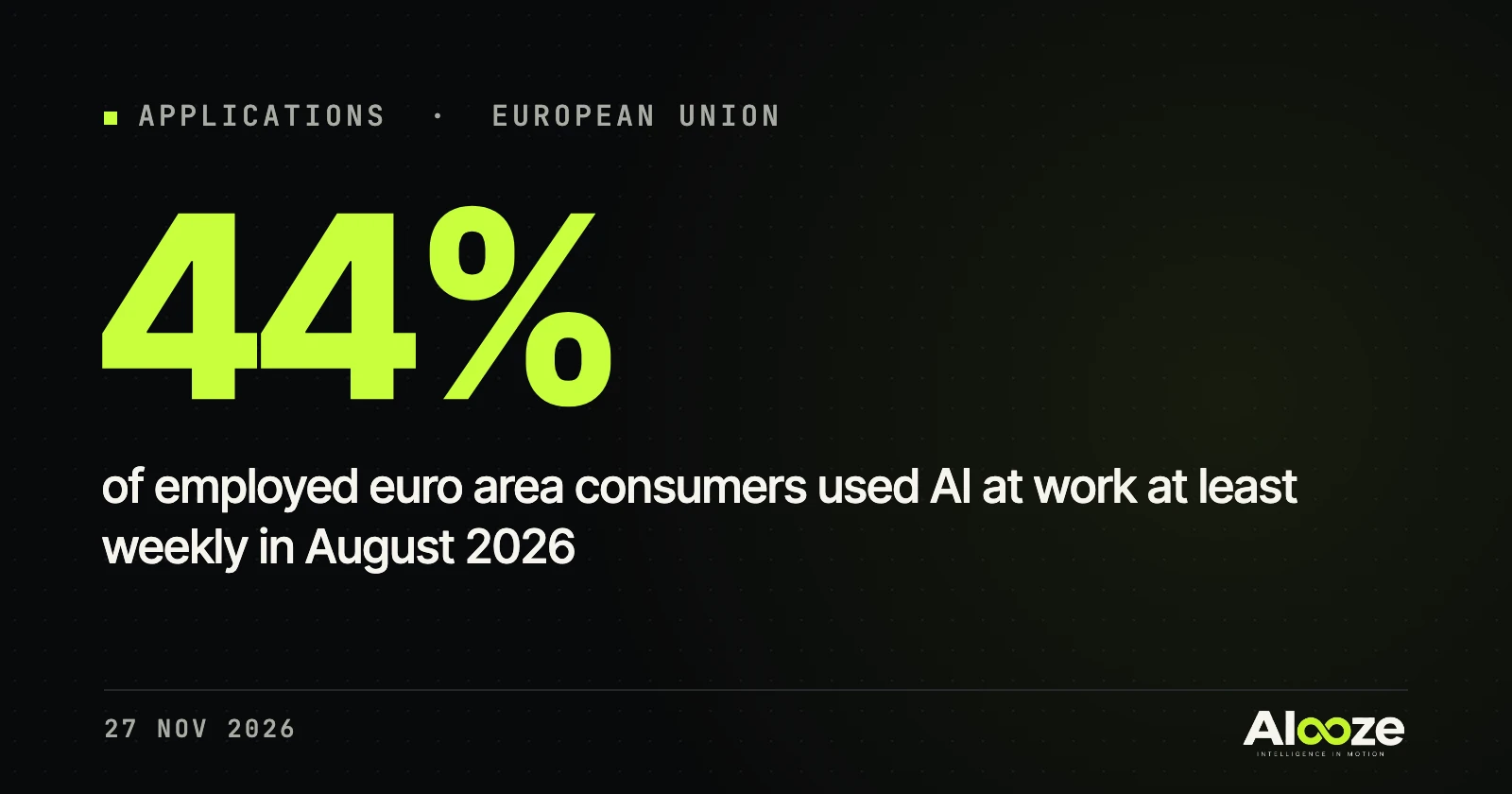
About 44% of employed people in the euro area used AI at work at least once a week in August 2026, and about 18% used it daily, according to the European Central Bank’s Consumer Expectations Survey. The findings were published on 27 November in an ECB blog post by Dimitris Georgarakos, Geoff Kenny and Justus Meyer.
Most users said AI helps: about 56% said it raised the amount of work they got done, and 47% said it improved the quality. Among those who saw no gain, the most common reason was the time needed to check or correct what the AI produced. People who do not use AI most often pointed to gaps in skills and knowledge, followed by privacy and security worries.
The survey also found unease. Consumers were more likely to expect AI to raise their risk of losing a job over the next year than to raise their income, a sizeable share expect it to push up prices, and support for regulating AI was strong among users and non-users alike.
this is one of the largest official snapshots of how ordinary European workers use AI. It suggests AI is now routine at work for many people, but that checking its output, and training people to use it, decide how much it really helps.