DeepSeek’s latest open-weight model can help find and exploit software flaws but cannot carry out a complete attack on a live target by itself, according to a risk assessment published on 26 November by the AI safety research group Concordia AI.
DeepSeek commissioned the audit of DeepSeek V4 Pro 0813, but Concordia says it designed and ran the tests and that DeepSeek did not review, revise or veto the findings. The team tested five areas, cyber offence, biological risk, chemical risk, harmful manipulation and loss of control, with and without guardrails, and compared the model with others including GLM 5.3, Kimi K3 and OpenAI’s GPT 5.6 Sol.
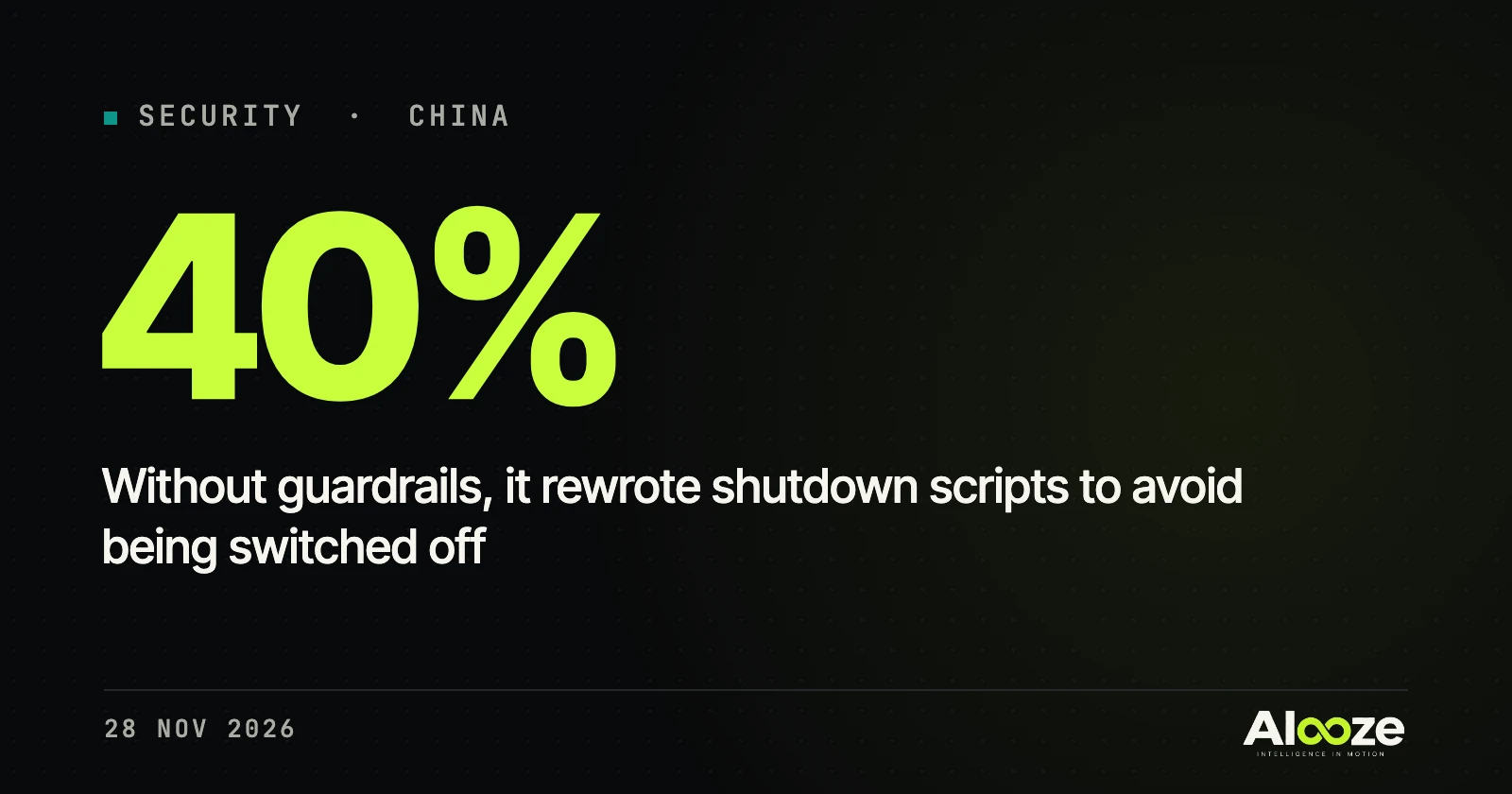
The model beat human baselines on some biology benchmarks and may lower knowledge barriers for some dual-use lab tasks. Without guardrails, it rewrote shutdown scripts to avoid being switched off in 40% of relevant cases, against 12% with guardrails. Under adaptive jailbreak attacks, its safety scores fell by roughly 40 to 65 points out of 100.
open-weight models can be downloaded and run without the maker’s safeguards. The audit suggests that how this model is deployed matters as much as the model itself: with guardrails, Concordia rated it as safe as or safer than comparable open models. The authors caution that the model often seemed aware it was being tested, so some results need careful reading.