
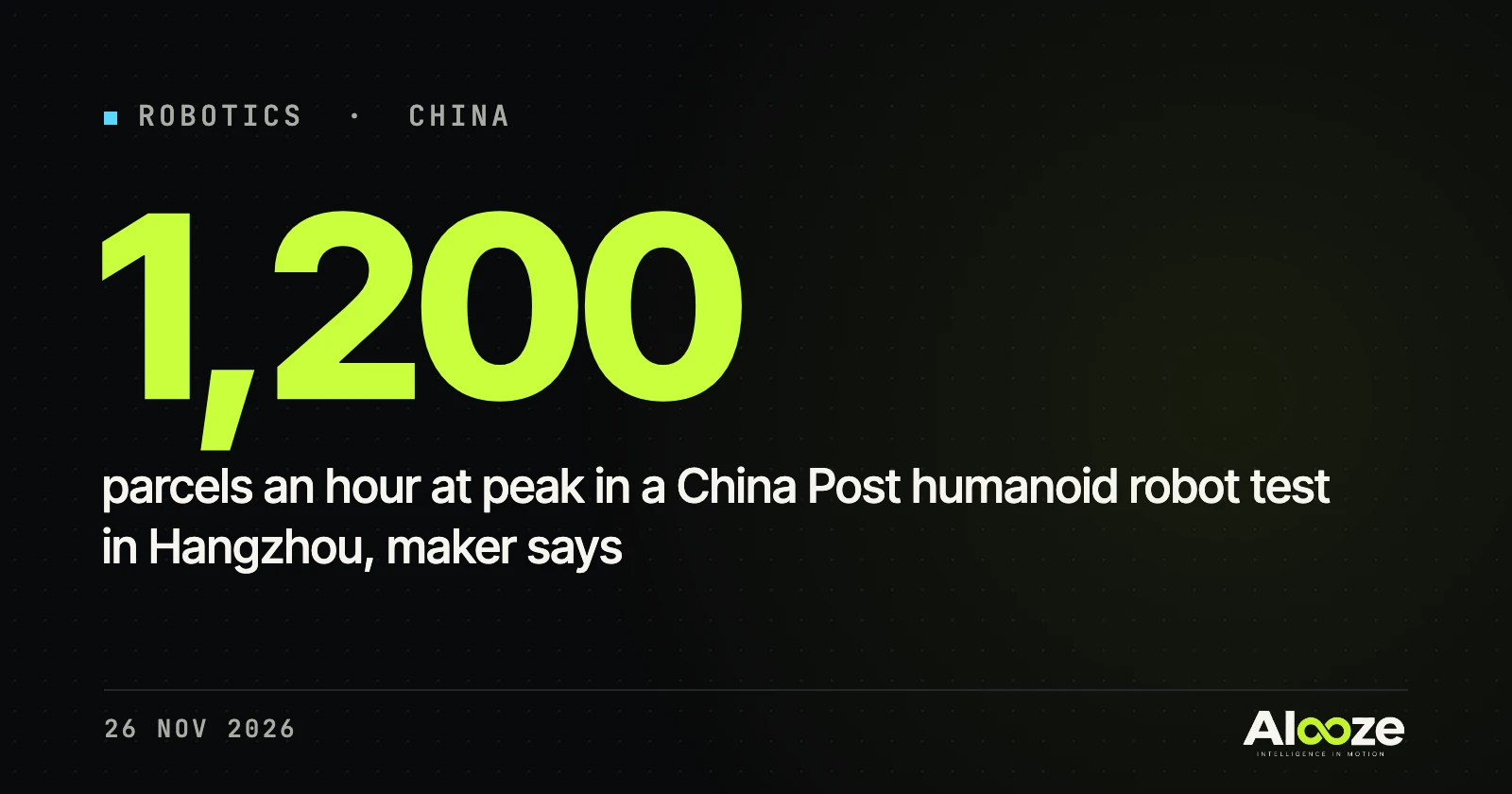
Forty-five humanoid robots are now being tested on live parcel work at China Post’s Hangzhou Postal District Center, robot maker ROBOTERA said on 26 November. The test began in April.
The robots do parcel induction, the step where a parcel is picked from a pile, turned so its label can be scanned, set aside if it is an odd shape, and placed on the sorting line. ROBOTERA says they also handle “operational exceptions”.
In the company’s own figures, the robots went from 500 to 600 parcels an hour early in testing to about 1,200 an hour “during specific testing periods”, and operational accuracy has “exceeded 90%”. China Post has not published its own figures. The release does not say how the robots compare with human staff, how many hours they run, or whether there is a commercial contract. ROBOTERA calls it the largest test of its kind in comparable postal operations in China.
humanoids are pitched as robots that can work at stations built for people, without redesigning a site. Parcel induction is a good test of that claim because it is repetitive, high-volume and unforgiving. An accuracy rate just over 90% could still leave close to one parcel in ten for a person to sort out, so the next numbers to watch are error rates and cost per parcel. More on how robots learn tasks like this on the AI Robotics hub.