Countries meeting at the UN in Geneva have agreed to work towards rules for weapons that can pick and attack targets without a human decision, but stopped short of starting talks on a binding ban.
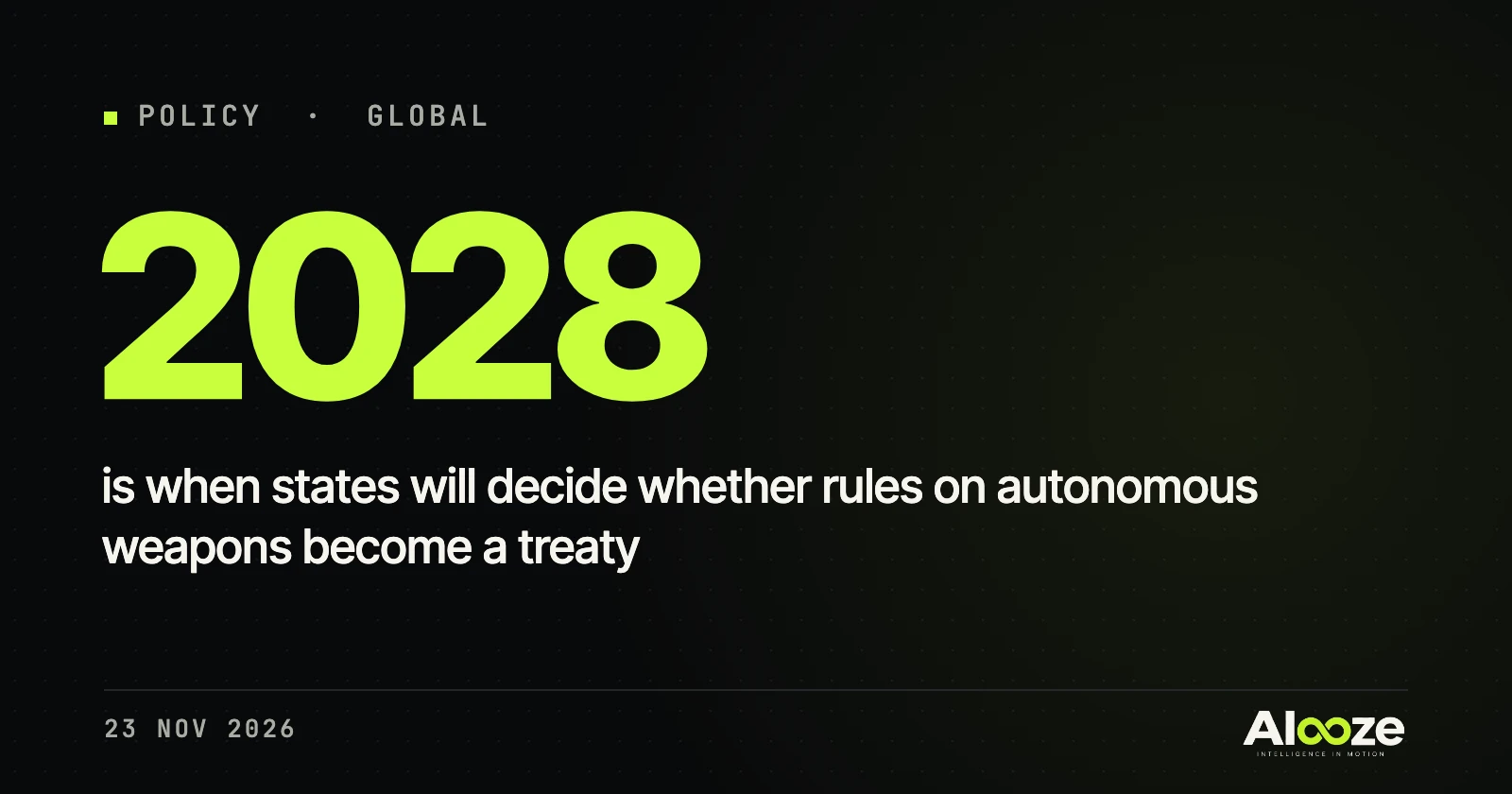
The 128 states in the Convention on Certain Conventional Weapons ended their review conference on 21 November. Conference president Julien Thoni said states “agreed to launch the elaboration of an international instrument on lethal autonomous weapons systems” over the next two years. Only then, by 2028, will they decide whether it should be a treaty and how binding it should be.
Most states wanted more. The campaign group Stop Killer Robots says more than 95 countries backed a treaty, and called the result “a watered-down mandate”. Because decisions need consensus, a few countries could hold the rest back. AFP reports that the United States and Russia were reluctant; the German agency dpa says the United States, Israel, Belarus and the UK opposed negotiating a binding agreement.
AI is making weapons that act on their own easier to build, and no international law is written specifically for them. UN disarmament chief Izumi Nakamitsu said the path to a binding agreement “is still open”, but one legal expert told AFP there may be no treaty by the end of 2028.