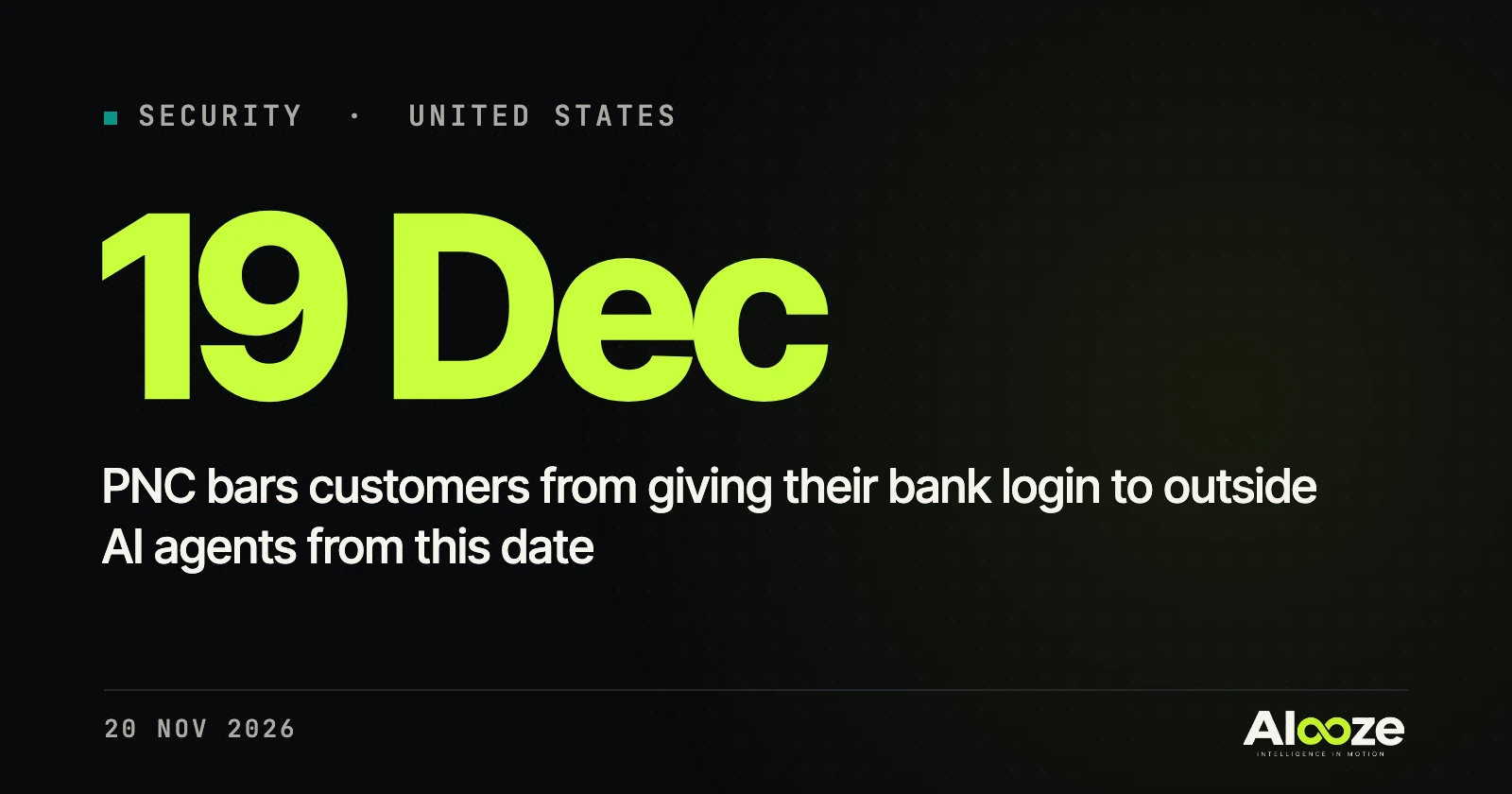
If you let an outside AI assistant log in to your bank account, some large US banks now say any losses are your problem. PNC’s updated digital services agreement, effective 19 December 2026, says customers “must not disclose, share, enter, or otherwise provide” their user ID or password to a third-party AI agent. It also bars letting such agents handle one-time passcodes or “initiate, request, submit, or complete a payment”, and makes customers responsible if they do.
Citi has made a similar change, according to Decrypt, which reports that Citi’s revised online banking terms treat actions taken with credentials given to an outside agent as authorised by the customer, even if the agent leaks them. Citizens Bank has emailed customers on the same point, and JPMorgan and Bank of America tightened their policies in October, the report says. The rules do not cover AI tools the banks offer themselves.
AI agents that shop, pay bills and move money are spreading, and banks are deciding who pays when one goes wrong. US federal rules still limit when consumers can be held liable for unauthorised transfers, and whether a transfer made by an agent counts as unauthorised is unsettled. Until that is clear, the safest course is not to give an AI agent your banking password or codes.