
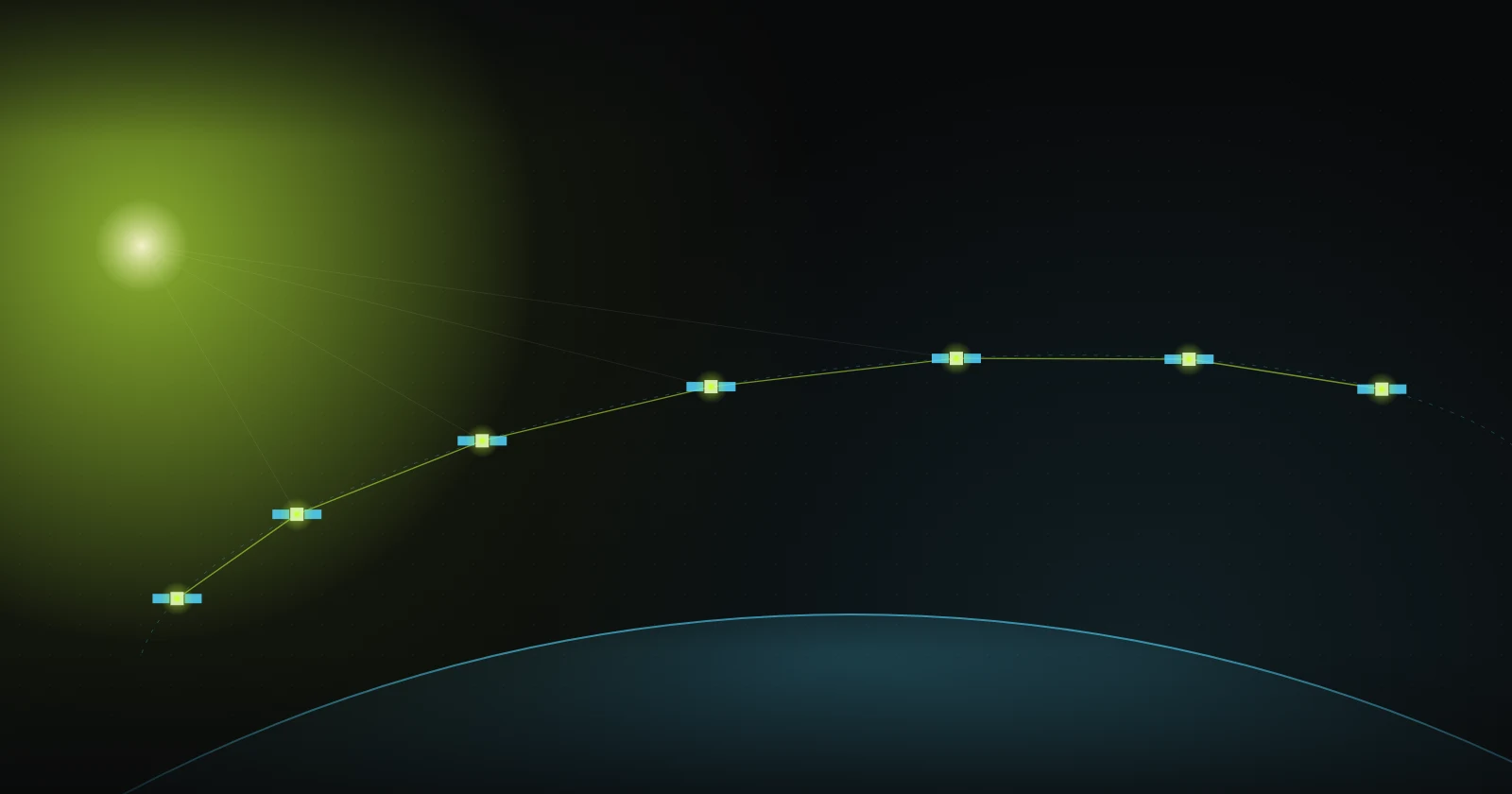
Google said on 1 October that the first prototype satellite for Project Suncatcher, its research effort to run machine learning hardware in space, is in orbit and operational. It launched on SpaceX’s Transporter-18 rideshare mission and was built in partnership with Planet, the Earth-imaging satellite company. On board are Google’s own tensor processing units, the custom chips it uses to train and serve its Gemini models.
Travis Beals, who leads the project at Google, put the reason for the launch in six words: “Some things can only be tested in space.” Google calls the mission “the first step in a long-term research moonshot exploring whether space could one day host scalable machine learning infrastructure”.
What the prototype is actually testing
This is not a data centre in orbit, and Google does not claim it is. The stated goal for the coming weeks is to “gather in-orbit data on how our TPUs handle the physical stress of spaceflight and the radiation and thermal extremes of space”. Those are the three ways a chip designed for a climate-controlled hall can die in orbit: the vibration and shock of launch, high-energy particles that flip bits or permanently damage circuits, and the swing between direct sunlight and shadow with no air to carry heat away.
Google has already done some of this on the ground. In earlier work it reported that its Trillium TPUs survived radiation exposure in particle-beam testing. Ground tests cannot reproduce everything at once, though, which is the point of flying the real thing.
Why anyone would put AI compute in space
The argument is about electricity. Google has said that solar panels in the right low Earth orbit can sit in near-constant sunlight and generate up to eight times as much power as the same panels on the ground. On Earth, the constraint on new AI data centres is increasingly not chip supply but grid connections, with operators waiting years for power and signing deals for gas turbines and nuclear plants to get it.
Google’s longer-term concept is a constellation of satellites flying in tight formation, each carrying dozens of chips and linked to its neighbours by optical connections. The company has said it plans two further prototype satellites for testing in 2027. The underlying research has been published as a peer-reviewed paper in the journal Joule.
What is still unanswered
Almost everything that would make this commercially real. Google has published no performance target for the prototype. Moving data between satellites fast enough to train large models, getting heat off a chip with no air, servicing hardware that cannot be reached, and the launch cost per useful computation are all open problems.
What has changed is that the question is no longer theoretical. A hyperscaler now has its own AI accelerators in orbit and will, within weeks, know how they behave there. Whatever the data says will shape whether space compute becomes a serious line in the AI infrastructure race or a well-documented dead end.
Why it matters: if the binding limit on AI is power, then the companies with the most credible answers to the power problem gain an advantage that model quality alone cannot buy. Suncatcher is Google’s most unusual bet on that front, and this launch is the first time it can be judged on evidence rather than intent.
Source: Google’s announcement.